

Hidden inflation risk triggers sharp sell-off and renewed scrutiny
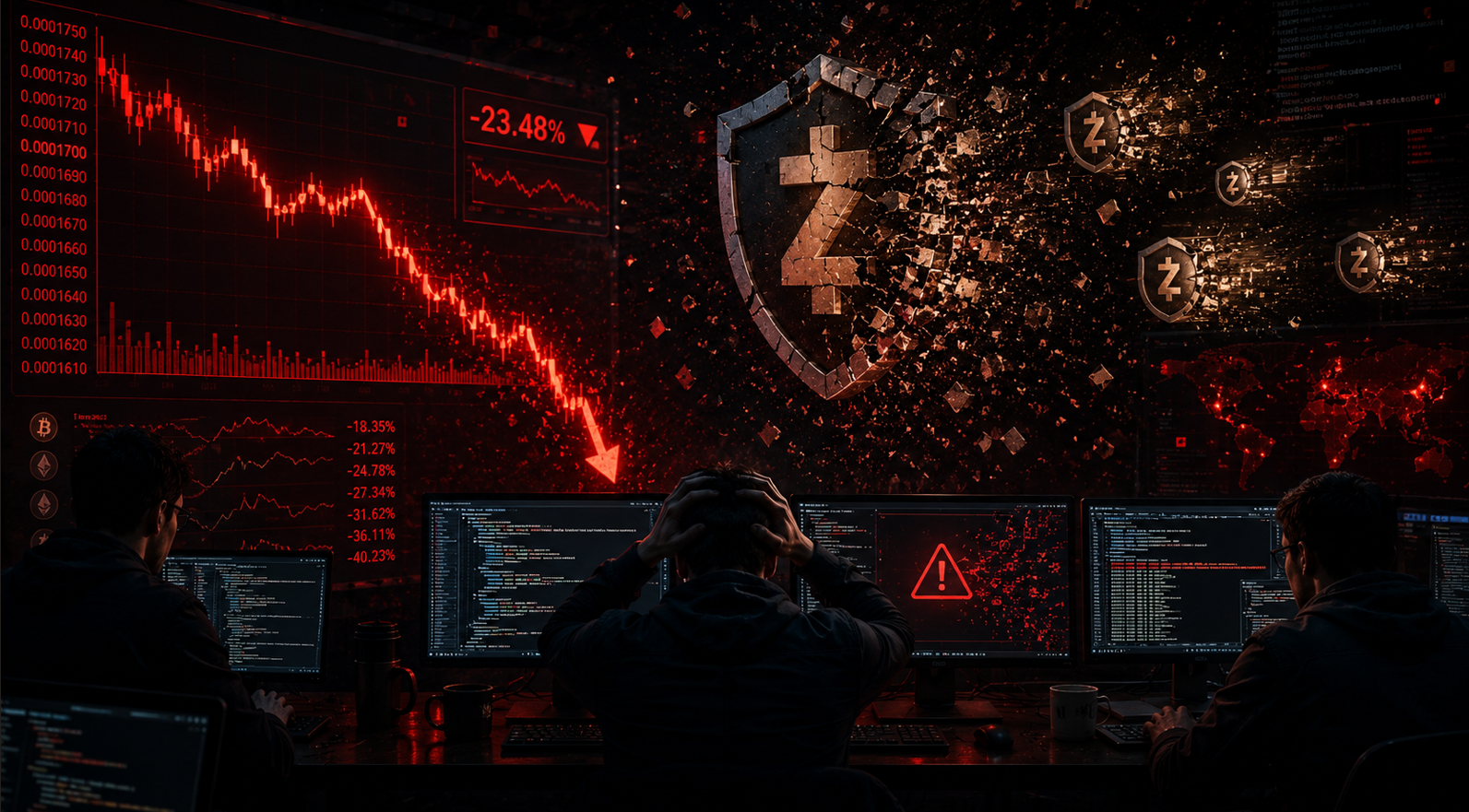
Zcash faced a severe market shock after disclosing a critical vulnerability in its Orchard shielded pool, sending the privacy-focused cryptocurrency down between 30 and 40 percent in a single day.
The sudden drop erased a significant portion of ZEC’s market value and reignited long-standing concerns around the risks embedded in privacy-first blockchain architectures.
At the heart of the issue was a flaw that had existed since Orchard’s activation in May 2022. Under certain conditions, the bug could have allowed an attacker to generate unlimited counterfeit ZEC that would still be accepted as valid by the network. Due to the shielded nature of transactions, such inflation could have remained undetected.
Discovery driven by AI assisted research
The vulnerability was identified on May 29, 2026 by security researcher Taylor Hornby during an audit conducted for Shielded Labs. Using an advanced AI model, Hornby uncovered a flaw in the zero-knowledge proof circuit tied to Orchard, specifically within an elliptic curve verification process.
The finding quickly moved beyond theory. A working proof of concept demonstrated that unlimited counterfeit coins could be created in a controlled environment without detection. The issue was immediately disclosed privately to Zcash developers for urgent remediation.
Emergency fixes contain immediate threat.
The Zcash team responded with speed, deploying a series of coordinated upgrades to neutralize the risk.
An emergency soft fork on June 2 temporarily disabled Orchard functionality, followed by a full network upgrade on June 3 that restored shielded transactions with a corrected cryptographic circuit.
Project leadership has stated there is no evidence the vulnerability was exploited before the fix. However, the privacy-preserving design of the shielded pool complicates definitive verification, leaving a degree of uncertainty around total supply integrity.
Efforts are now underway to introduce additional verification mechanisms in future upgrades to strengthen confidence in the network’s monetary guarantees.
Markets react as trust comes under pressure
The disclosure triggered immediate selling pressure, with ZEC falling sharply from recent highs and briefly stabilizing at significantly lower levels. The reaction underscored how quickly sentiment can shift when foundational assumptions about a network are challenged.
Beyond price action, the incident has reignited debate across the crypto industry. Supporters highlighted the responsible disclosure process and rapid response, while critics pointed to the episode as evidence of the inherent risks in deeply private systems where auditing supply is more complex.
The broader implication is clear. Privacy enhances user protection but can also obscure systemic issues, making rare vulnerabilities more consequential when they surface.
A defining moment for privacy coins
This is not the first time Zcash has faced a critical inflation-related bug, but the scale and timing of this event amplify its significance.
The project now enters a critical phase where rebuilding trust will depend on transparency, stronger auditing practices, and potentially new tools that allow verification without compromising privacy.
For the wider market, the episode serves as a stark reminder that even mature protocols are not immune to deep technical risks. In an environment where confidence drives value, the way Zcash responds in the coming weeks may determine whether this event becomes a temporary disruption or a lasting reputational setback.