

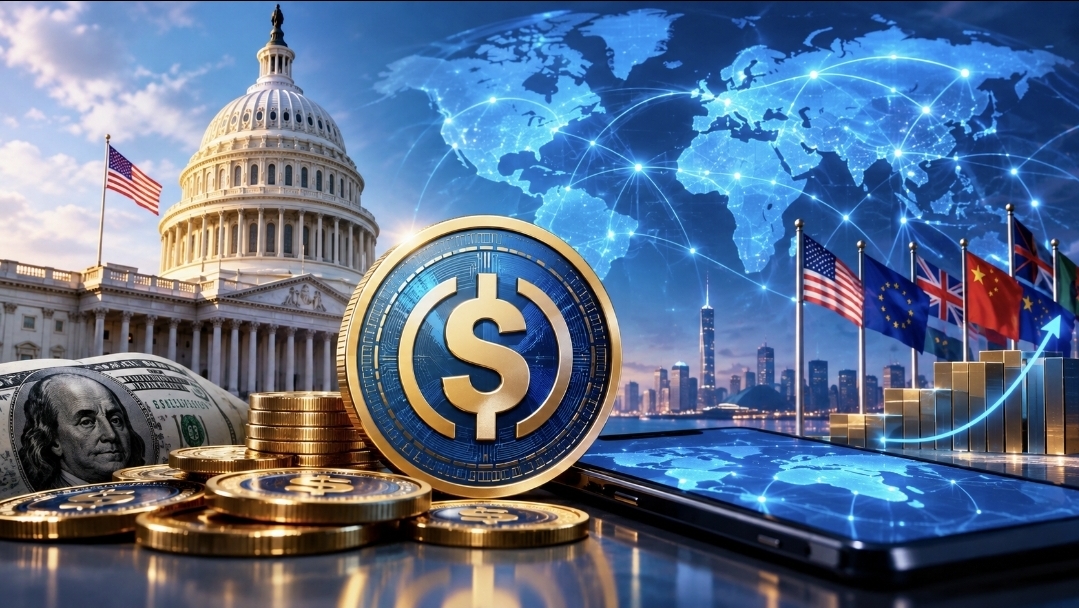
The United States is considering a new initiative to promote the use of dollar-denominated stablecoins overseas, according to people familiar with the discussions. The proposed strategy could involve multiple federal agencies working with private sector companies to expand dollar backed crypto stablecoins internationally and reinforce the role of the US dollar in the global financial system.
The proposal comes as stablecoins become increasingly important in cryptocurrency markets, digital payments and cross-border finance. Dollar linked stablecoins already dominate the global stablecoin market, while their issuers commonly hold reserves in cash, short term US government debt and other highly liquid assets. The growing use of these tokens could therefore create additional demand for dollar denominated assets and US Treasury securities.
US Explores Overseas Stablecoin Expansion
According to Bloomberg, the Trump administration is considering supporting stablecoin projects through joint ventures between the US government and private sector companies. People familiar with the discussions said the initiative could involve the Treasury Department, State Department and potentially the US International Development Finance Corp. However, the Treasury and White House did not comment on the report, while State Department and DFC representatives also declined to comment.
The proposed strategy would connect cryptocurrency adoption with a broader effort to maintain the dollar’s position in international finance. Dollar backed stablecoins allow users to hold and transfer digital representations of US dollars through blockchain networks, potentially giving the currency greater reach across digital payment systems and crypto markets.
The development follows the US government’s broader effort to establish a federal regulatory framework for stablecoins. The GENIUS Act, signed into law in 2025, created federal rules for payment stablecoins and requires qualifying issuers to maintain reserves that include dollars and short term US Treasuries. Treasury Secretary Scott Bessent has also argued that stablecoin growth could reinforce the dollar’s role as the world’s reserve currency.
Stablecoins Could Increase Treasury Demand
A major economic factor behind the proposed strategy is the relationship between stablecoin reserves and US government debt. Stablecoin issuers generally need liquid assets to support the value of their tokens, and short-term US Treasury securities have become an important part of those reserve portfolios.
Research from the Federal Reserve Bank of Richmond found that reserve backed stablecoins can increase demand for US Treasuries, meaning wider adoption could strengthen the connection between digital asset growth and demand for US government debt. The research also notes that whether stablecoins ultimately reinforce or challenge the dollar depends significantly on how issuers back their tokens.
The Bank for International Settlements reported that dollar linked stablecoins dominate the market, with major issuers holding substantial amounts of dollar denominated instruments. The BIS estimated stablecoin market capitalization at about $320 billion at the end of May 2026 and noted that dollar linked stablecoins accounted for the overwhelming majority of the market.
The international banking sector is also moving deeper into stablecoins. In September, Reuters reported that a group of 21 financial institutions, including Goldman Sachs, Bank of America, Citi and Deutsche Bank, planned to establish a company to issue a dollar pegged stablecoin, with a potential launch targeted for the first half of 2027. The group also plans to explore stablecoins linked to other G7 currencies.
Dollar Stablecoins Face Global Competition
The potential US initiative arrives as other regions and countries develop competing digital payment infrastructure. Bloomberg reported that international efforts include Project mBridge, which incorporates China’s digital yuan, while the European Central Bank continues advancing its digital euro plans and blockchain based payment infrastructure.
That competition could make stablecoins an increasingly important part of the global digital payments race. Dollar backed tokens already provide blockchain based access to dollar denominated value, while competing central bank digital currencies and non dollar stablecoins could offer alternative payment rails in different regions.
The global stablecoin market has also expanded beyond its original role in crypto trading. Stablecoins are increasingly being explored for cross border payments, financial settlement and digital commerce, although the BIS has noted that their effectiveness for international payments still varies because of fees, spreads and on and off ramp costs.
For the US, a successful international expansion of dollar backed stablecoins could create a larger digital ecosystem built around the dollar while potentially increasing demand for US Treasury assets. However, the reported initiative remains under consideration, and there is no confirmed timetable for implementation. The next stage will depend on whether the administration converts the proposal into formal policy and how international regulators, financial institutions and payment companies respond.