
Tether has expanded its artificial intelligence push with the launch of QVAC TranslatePsy AfriSLM, a new family of open source AI translation models designed to bring high quality language technology directly to smartphones, laptops and other everyday devices. The models target 19 African languages and can operate fully offline, removing the need for continuous internet access or cloud based processing.
The launch marks a significant move for Tether beyond its established stablecoin business as the company develops technology focused on local AI, privacy and accessibility. Through its QVAC AI research initiative, Tether aims to make artificial intelligence more useful in regions where expensive hardware, unreliable connectivity and limited support for local languages can restrict access to modern AI tools.
TranslatePsy AfriSLM focuses on languages including Hausa, Yoruba, Igbo, Swahili, Amharic, Zulu, Xhosa, Somali, Oromo, Lingala, Kinyarwanda, Luganda, Malagasy, Nyanja, Shona, Southern Sotho, Tswana, Wolof and Afrikaans. Tether says the models can translate locally without sending users’ data to external cloud servers, creating an approach that combines language accessibility with greater privacy.
Tether Targets Africa’s AI Language Gap
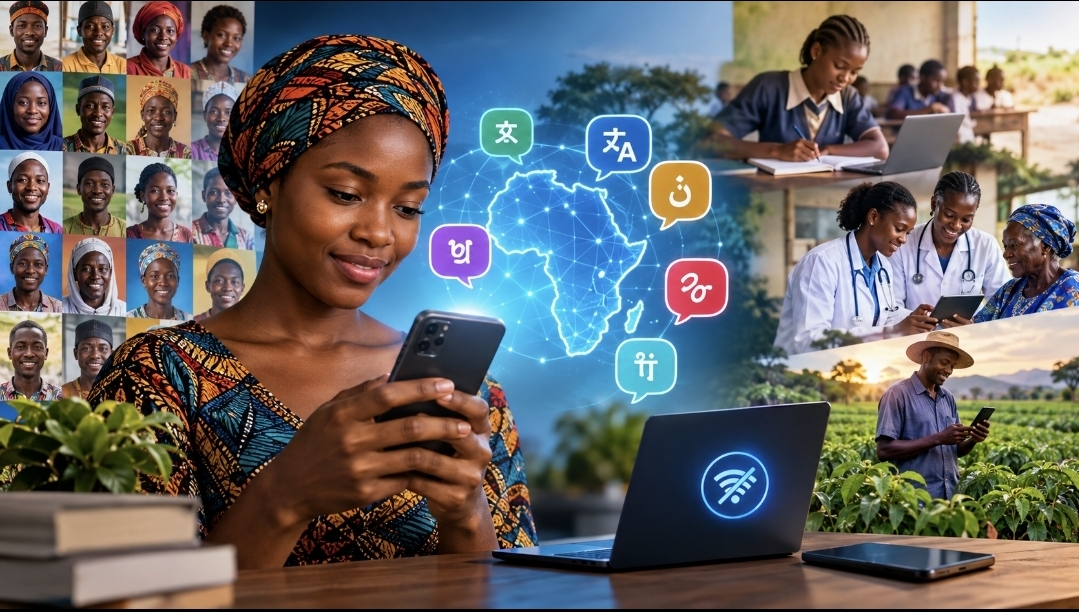
The Tether AI translation models address one of the major challenges facing AI adoption across Africa: many widely used artificial intelligence systems provide stronger support for languages with large digital datasets while offering limited capabilities for numerous African languages. QVAC says the lack of local language AI can restrict access to education, healthcare information, agricultural knowledge and other essential resources.
Offline AI translation could help reduce that barrier because users do not need a constant internet connection to access the technology. A student could translate educational material on a phone, while farmers could access agricultural information in a familiar language even in locations with weak connectivity. Healthcare and public information applications could also benefit from translation that takes place directly on the device.
Privacy represents another important part of the project. Because the TranslatePsy models can process translations locally, users can avoid sending translation requests to third-party cloud servers. This local processing approach could make AI translation more practical for communities and organizations that face connectivity limitations or have concerns about transmitting sensitive information online.
Tether CEO Paolo Ardoino has positioned the initiative as part of a broader effort to make AI more inclusive. Rather than requiring people to enter the existing cloud AI ecosystem, the company wants to put useful AI capabilities directly onto devices that people already own.
Smaller AI Model Challenges Larger Rivals
One of the most notable aspects of TranslatePsy AfriSLM is its performance relative to much larger AI models. Tether’s research says the smallest 0.8 billion parameter version outperformed systems such as TranslateGemma 27B and Qwen3.5 122B A10B on selected African-language translation benchmarks. The company attributes the results partly to careful data selection and quality filtering rather than simply increasing model size.
The TranslatePsy AfriSLM family comes in 0.8B, 2B and 4B parameter versions. Tether also provides quantized GGUF versions designed for local inference through tools such as llama.cpp, allowing developers and users to run the models on compatible laptops and smartphones without expensive GPUs or an internet connection.
The research team says its data processing strategy removed up to 96% of noisy or redundant training tokens without degrading translation performance. The project therefore highlights a broader trend in AI development: specialized models with carefully curated data can sometimes deliver strong results without the enormous computing requirements associated with the largest general purpose models.
TranslatePsy AfriSLM also supports conversational translation, language identification and multilingual conversations. The system can switch between languages during a session, moving beyond basic sentence by sentence translation and toward a more flexible local AI assistant for multilingual users.
Free AI Translation Comes to Everyday Devices
Tether has released the TranslatePsy AfriSLM models, inference resources and related research under open-source licensing, giving developers and researchers an opportunity to experiment with the technology and build applications around African language translation. The company says the research behind the models has also been accepted for presentation at EMNLP 2026.
The initiative also forms part of Tether’s wider QVAC strategy, which focuses on local AI and intelligence that can run across different devices rather than depending entirely on centralized data centers. QVAC describes TranslatePsy as a specialized machine-translation family, with AfriSLM focused on 19 African languages and TranslatePsy Nano designed for a smaller device footprint across eight African and nine European languages.
For Africa, the significance extends beyond translation technology. By combining offline operation, local language support, open-source models and relatively small hardware requirements, Tether is targeting several barriers that have historically limited AI access. If developers successfully adapt the models for education, agriculture, healthcare information and other local applications, offline AI translation could become an important tool for communities where reliable internet access remains difficult.
Tether’s latest AI release therefore signals a broader ambition: make artificial intelligence available where people are, in the languages they use, and on devices they already own. The company’s expansion into local AI also shows how the competition in artificial intelligence is moving beyond simply building larger models toward creating smaller, specialized systems that can work efficiently at the edge.