
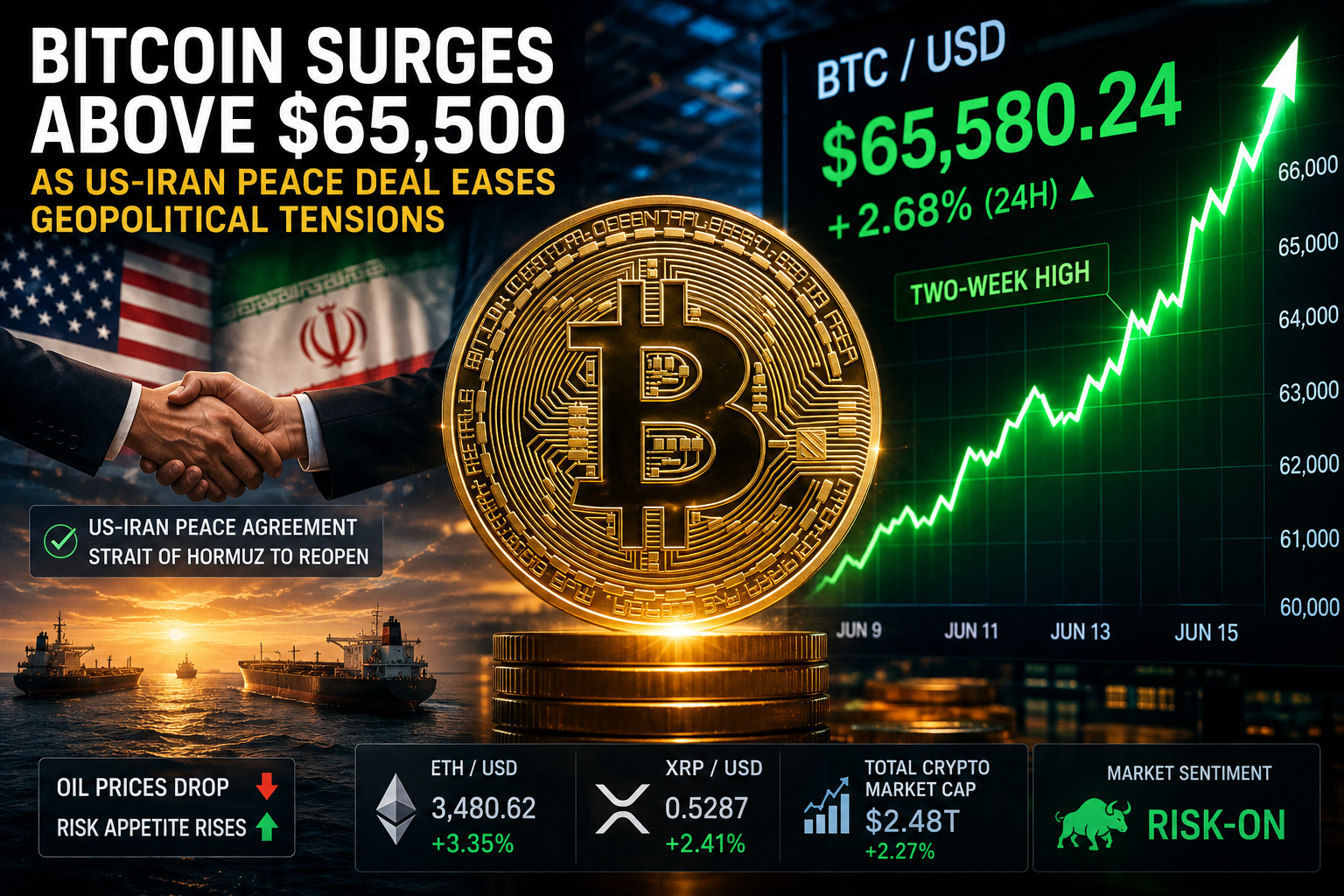
Bitcoin (BTC) surged to its highest level in nearly two weeks on Monday, climbing above $65,500 as easing geopolitical tensions between the United States and Iran boosted investor confidence across global financial markets.
The world’s largest cryptocurrency gained nearly 3% over the past 24 hours, with traders responding positively to reports of a peace agreement that could significantly reduce instability in the Middle East. The development has reignited risk appetite, driving fresh inflows into both traditional and digital asset markets.
Geopolitical Breakthrough Fuels Market Optimism
The rally follows reports that the United States and Iran have reached a diplomatic agreement that includes the reopening of the Strait of Hormuz, one of the world’s most critical energy shipping routes.
The Strait of Hormuz handles a substantial share of global oil exports, making it a key indicator of geopolitical risk. News of the agreement sent oil prices lower, easing concerns about potential supply disruptions and reducing pressure on global markets.
As fears of escalating conflict faded, investors rotated back into risk assets, helping Bitcoin recover recent losses linked to geopolitical uncertainty.
Crypto Market Posts Broad Gains
Bitcoin’s rally extended across the wider digital asset market, lifting overall crypto market capitalization and supporting gains among major altcoins.
Ethereum (ETH), XRP, and several large-cap digital assets also moved higher as traders embraced a broader risk-on environment. Market analysts described the move as a relief rally following days of heightened volatility driven by concerns over regional tensions and energy market disruptions.
At the time of writing, Bitcoin was trading between $65,600 and $65,800, marking its strongest performance since late May.
What’s Next for Bitcoin?
While the immediate market reaction has been positive, analysts caution that Bitcoin’s longer-term trajectory will continue to depend on broader macroeconomic factors.
Investors remain focused on upcoming central bank policy decisions, institutional demand, spot Bitcoin ETF flows, and overall market liquidity conditions. Any shift in these factors could influence whether BTC can maintain its current momentum.
The easing of geopolitical tensions may also support global economic stability, creating a more favorable environment for risk assets, including cryptocurrencies.
Bitcoin’s Safe Haven Narrative Faces Another Test
The latest price action highlights the ongoing debate surrounding Bitcoin’s role during periods of geopolitical uncertainty.
While some investors view Bitcoin as a hedge against global instability, recent market behavior suggests the asset continues to trade closely with broader risk sentiment. As tensions eased, Bitcoin moved higher alongside equities and other growth-focused assets.
For the Web3 and decentralized finance (DeFi) ecosystem, reduced macroeconomic uncertainty could encourage renewed participation in on-chain activity, digital asset innovation, and capital deployment across emerging blockchain sectors.
With markets remaining highly sensitive to geopolitical developments, traders will be closely monitoring diplomatic updates, macroeconomic data, and institutional flows for clues on Bitcoin’s next major move.