

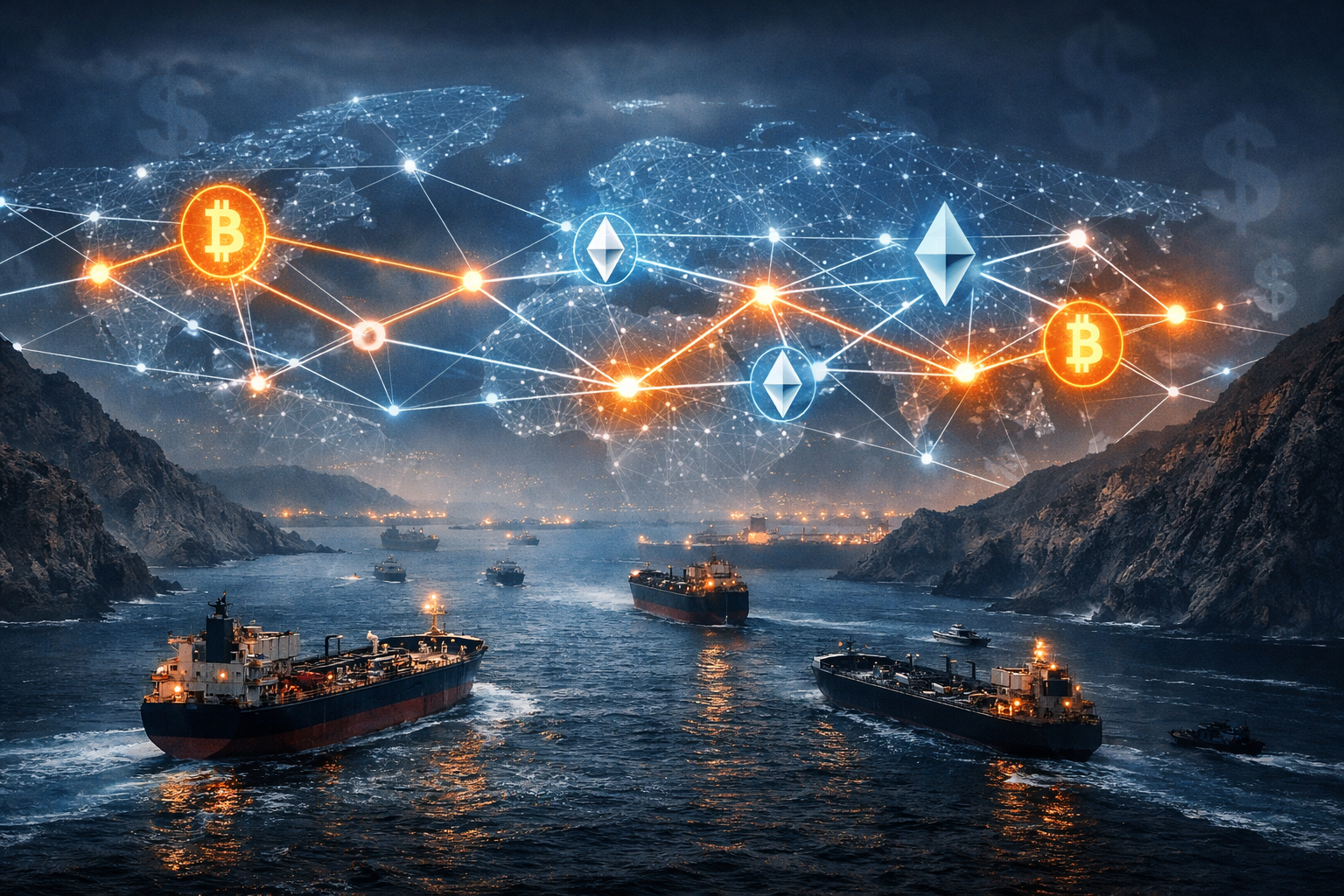
The ongoing conflict in Iran has triggered predictable debates about oil supply, regional security and the risk of wider war. What receives far less attention is a financial question that sits beneath the geopolitical headlines, whether escalating conflict could gradually weaken the foundations of the petrodollar system.
Amid heightened geopolitical pressure and politicized financial rails, countries and individuals will increasingly look for alternatives to dollar-dominated settlement systems, which will quietly accelerate interest in blockchain-based financial infrastructure.
This view may be unpalatable in Western policy circles because the dollar’s dominance has long been treated as a structural constant of global finance. But wars often reshape financial systems in ways that initially seem improbable. If energy markets, sanctions regimes and payment systems collide in the current conflict environment, the resulting currency tensions could push the global economy toward new rails for transferring value.
The petrodollar’s quiet vulnerability
The petrodollar system, the practice of pricing and settling oil trades in U.S. dollars, has anchored global demand for the currency since the 1970s. When oil producers sell energy in dollars, buyers must hold dollars, reinforcing the currency’s central role in international trade. But that system relies on relative stability in energy markets and broad acceptance of dollar-based payment channels. Conflict involving Iran risks disrupting both.
Iran sits at the center of critical energy routes, particularly the Strait of Hormuz, through which a large share of the world’s oil flows. Even the perception that the conflict could disrupt shipments tends to push oil markets into volatility. At the same time, sanctions and financial restrictions already limit how Iran and its trading partners access global payment systems such as SWIFT. When countries find themselves excluded from traditional financial rails, they inevitably search for alternatives.
Currency wars rarely announce themselves
This is where currency politics and blockchain infrastructure begin to intersect. Over the past decade, sanctioned states have experimented with alternative payment channels ranging from bilateral currency agreements to commodity-backed trade arrangements. Cryptocurrencies and blockchain-based settlement networks are now part of that toolkit.
The point is not that Bitcoin or stablecoins will suddenly replace the dollar in global oil markets. That would be unrealistic in the near term. The real shift occurs gradually, as geopolitical pressure forces actors to build parallel financial systems that reduce reliance on traditional dollar settlement. Each time sanctions disrupt a financial channel, or a bank blocks cross-border payments due to geopolitical risk, the incentive to experiment with decentralized rails grows.
Some readers will argue that the dollar remains too deeply embedded in global finance to face meaningful disruption from regional conflicts. Others may see discussions of cryptocurrency as a geopolitical alternative as overstated or politically uncomfortable. But ignoring the financial consequences of geopolitical fragmentation will not prevent them from emerging.
Currency competition rarely announces itself dramatically. Instead, it develops through small shifts in how capital moves across borders. The war involving Iran could accelerate several of those shifts simultaneously. Energy exporters may diversify settlement currencies to hedge geopolitical exposure. Countries subject to sanctions will expand alternative payment channels. And individuals caught between financial restrictions and political disputes may increasingly turn to decentralized systems to move money.
When financial rails become political
The implications extend beyond state-level currency politics. As geopolitical tensions intensify, financial platforms and payment providers often respond with stricter compliance measures, freezing transactions linked to sanctioned jurisdictions or politically sensitive causes. Traditional crowdfunding platforms have already faced criticism for freezing or restricting funds tied to controversial humanitarian campaigns. When financial systems become entangled with political disputes, the people most affected are often ordinary citizens rather than governments.
This is where decentralized crowdfunding begins to play a larger role. Blockchain-based fundraising platforms allow funds to be raised, tracked and distributed through transparent smart contracts rather than centralized payment processors. In situations where banking channels are restricted or politically sensitive, these systems offer a neutral financial infrastructure that operates independently of traditional intermediaries.
The model addresses several longstanding weaknesses in centralized crowdfunding systems. Donations can be tracked on-chain, reducing uncertainty about where funds are held or how they are distributed. Smart contracts can automatically release funds based on predefined conditions or trigger refunds if project goals are not met. Most importantly, participation becomes permissionless, allowing individuals from different jurisdictions to contribute without relying on correspondent banking networks that may be constrained by geopolitics.
Market instability accelerates new financial rails
Market instability tends to accelerate experimentation with new financial tools. When currencies fluctuate sharply, capital controls tighten, or payment rails become politically restricted, individuals and institutions start exploring alternative ways to move value. The combination of geopolitical conflict and financial fragmentation could therefore become a catalyst for broader adoption of decentralized financial infrastructure.
The market implications are complex. Increased volatility in energy markets could strengthen short-term demand for dollars even as longer-term diversification efforts quietly expand.
Meanwhile, stablecoins and decentralized finance platforms may see increased use in regions where access to traditional banking rails becomes uncertain. Crypto markets have historically reacted strongly to geopolitical shocks, often experiencing spikes in trading volume when capital seeks alternative settlement channels.
None of this suggests that the petrodollar system will collapse overnight. But financial dominance rarely erodes in a single moment. It weakens through gradual shifts in incentives, infrastructure and trust.
Wars reshape economic systems as much as political ones. If the conflict involving Iran continues to disrupt energy flows and financial networks, the global conversation about currency power may shift in ways that few policymakers currently want to acknowledge. And in that environment, decentralized financial infrastructure may move from the margins of global finance to a much more central role in how value moves across borders.
———————
About the author
Joshua Kim is a financial and M&A entrepreneur who started his business career with the acquisition of a handful of healthcare services businesses leveraging SBA loan financing at 19 and 20 years old. Subsequent to these businesses, he launched a financial consulting company focused on raising capital through SBA financing for others, specifically tailored to acquisitions of SMEs in the $10M and under range. He is the CEO and Founder of DonaFi. You can follow Joshua on LinkedIn here.