

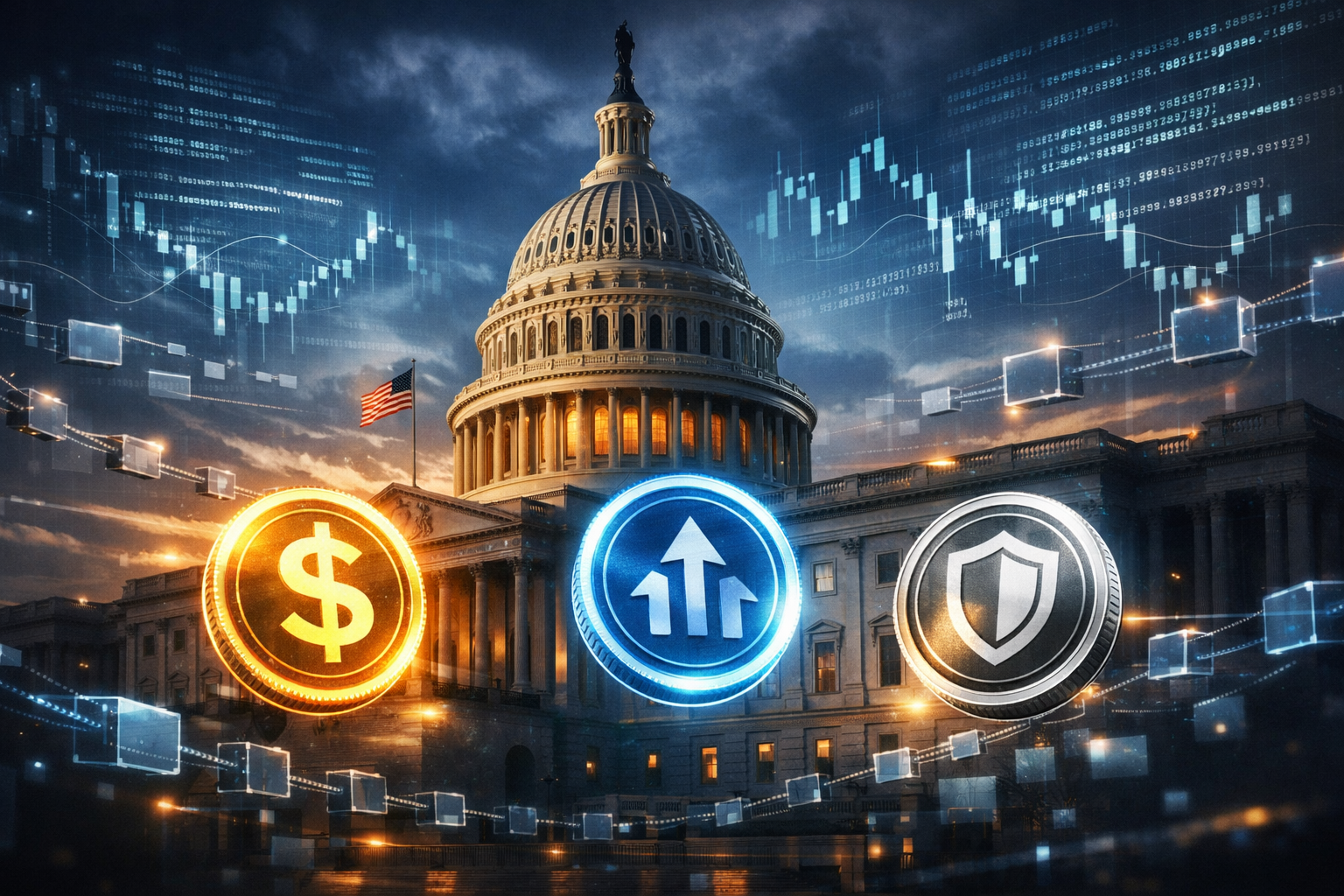
The United States government has taken a decisive step toward reshaping the digital asset economy, unveiling a new regulatory framework aimed squarely at stablecoins and the risks they pose to financial stability and national security.
At the center of the proposal is a push by the U.S. Treasury to impose stricter controls on stablecoin issuers, particularly around anti money laundering compliance and sanctions enforcement. Officials argue that the rapid growth of dollar-pegged digital tokens has created a parallel financial system that could be exploited for illicit activity if left unchecked.
Stablecoins, which are designed to maintain a fixed value by being pegged to fiat currencies such as the U.S. dollar, have become a critical piece of the crypto ecosystem. They are widely used for trading, cross-border payments, and increasingly, real-world transactions. However, their scale and speed have raised alarms in Washington, especially as adoption accelerates among both retail users and institutions.
Under the proposed rules, issuers would likely face requirements similar to traditional financial institutions, including rigorous identity verification, transaction monitoring, and detailed reserve disclosures. The aim is to ensure that stablecoins are fully backed and transparent, while also preventing their use in sanctions evasion or money laundering schemes.
The move comes at a time of intensifying global competition over digital finance. Policymakers are balancing two competing priorities: fostering innovation in blockchain-based payments while safeguarding the integrity of the financial system. The United States has faced criticism in recent years for regulatory ambiguity, which some argue has pushed crypto innovation offshore.
A turning point for crypto regulation
Industry reaction has been mixed. Some firms see the framework as a long overdue step that could legitimize stablecoins and encourage broader institutional adoption. Others warn that overly burdensome requirements could stifle innovation and drive smaller players out of the market.
The timing is also significant. With stablecoins increasingly being integrated into payment networks and even explored by major corporations for consumer use, the regulatory direction taken by the United States could set a global precedent.
If implemented, the framework would mark one of the most consequential shifts in crypto policy to date, effectively bringing a large portion of the digital asset economy under the same scrutiny as traditional banking.
For investors, developers, and policymakers alike, the message is clear: the era of lightly regulated stablecoins in the world’s largest economy may be coming to an end.