

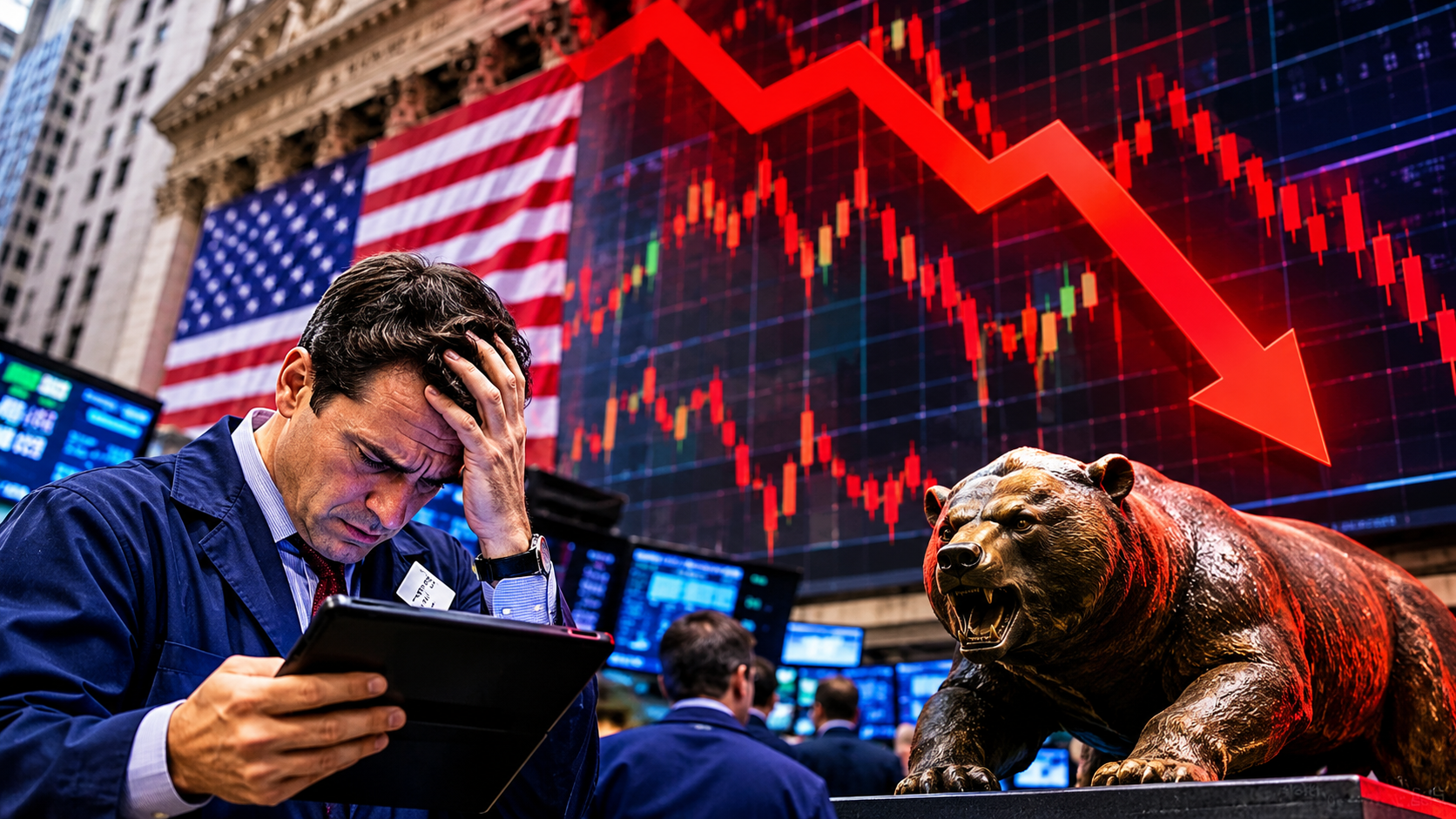
The US stock market suffered a massive sell off on Thursday, November 5, 2026, wiping approximately $2.3 trillion from the combined market value of US listed stocks within the first hour of trading. The sudden decline sent shockwaves across Wall Street as investors rushed to reduce their exposure to technology shares, semiconductor companies, and artificial intelligence (AI) related stocks.
The sell off followed a sharp reversal in market sentiment after Wednesday’s post election rally. Investors had initially welcomed the US midterm election results, but renewed concerns about political changes, AI infrastructure spending, and the future of the technology sector quickly turned optimism into heavy selling pressure.
According to market reports, the estimated $2.3 trillion decline occurred roughly one hour after the opening bell at 9:30 a.m. Eastern Time. Losses subsequently widened, with reports indicating that US equities briefly shed approximately $3 trillion in market value before recovering some ground.
Technology and AI Stocks Lead Wall Street Sell Off
Technology companies and semiconductor manufacturers experienced some of the heaviest losses during Thursday’s market downturn. Investors increasingly questioned whether the massive investments in artificial intelligence infrastructure and data centre expansion could continue at their current pace.
Nvidia, Micron, and other major semiconductor companies faced significant selling pressure as investors reassessed the outlook for AI related businesses. Nvidia reportedly lost hundreds of billions of dollars in market value, while several semiconductor and data storage companies recorded substantial share price declines.
The Nasdaq Composite, which tracks many of America’s largest technology companies, experienced particularly heavy losses. The S&P 500 also dropped sharply, reflecting the broader impact of the sell off across major sectors of the US economy.
Yahoo Finance reported that semiconductor stocks experienced widespread declines, with the Philadelphia Semiconductor Index falling more than 9% during the trading session. The developments highlighted how quickly concerns surrounding AI investment and technology valuations can affect the wider stock market.
Political Uncertainty and AI Spending Concerns Shake Investors
Thursday’s stock market decline followed a dramatic shift in investor sentiment after Democrats secured victories in both chambers of Congress during the US midterm elections.
Although the election results initially triggered a strong market rally, investors began reassessing what the political changes could mean for technology companies, AI infrastructure investments, and future regulatory policies.
Concerns surrounding potential changes to the regulatory environment and the pace of data centre construction added pressure to technology stocks. Investors also questioned whether companies building expensive AI infrastructure would generate sufficient returns to justify their spending.
The uncertainty extended beyond individual technology companies, affecting semiconductor manufacturers, cloud infrastructure providers, data centre operators, and other businesses connected to the AI industry.
The sell off also affected cryptocurrency markets, as Bitcoin experienced renewed downward pressure alongside declining technology stocks. Bitcoin fell below $77,000 during the downturn, demonstrating how weakness in traditional financial markets can spread into digital assets.
US Stock Market Faces Renewed Volatility
The estimated $2.3 trillion loss during the first hour of trading highlights the scale of Thursday’s market uncertainty. Although US stocks recovered some ground after reaching their intraday lows, the broader market remained under significant pressure.
The Nasdaq’s decline also raised concerns about a potential correction in technology stocks, particularly as investors reconsidered the valuations of companies that benefited from the artificial intelligence investment boom.
Market participants will continue monitoring corporate earnings, economic indicators, political developments, and expectations surrounding AI infrastructure spending to determine whether the sell off represents a temporary market correction or the beginning of a deeper downturn.
For investors, Thursday’s developments serve as a reminder of the risks associated with concentrated exposure to high growth technology stocks. With trillions of dollars in market value disappearing within hours, Wall Street is once again facing questions about market valuations, investor confidence, and the sustainability of the AI driven stock market rally.