

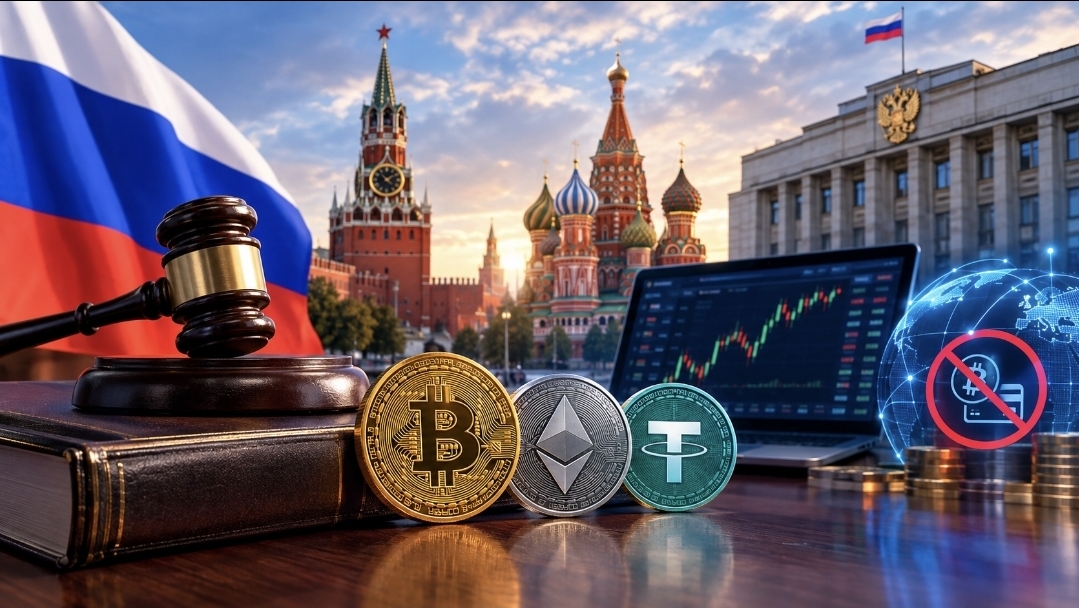
Russia’s first comprehensive cryptocurrency law has officially taken effect on September 1, 2026, creating a regulated framework for buying, selling, holding and trading digital assets while keeping cryptocurrency banned as a domestic payment method.
The legislation, Federal Law No. 282-FZ, gives cryptocurrencies a formal place within Russia’s financial system and establishes rules for crypto exchanges, digital depositories and other intermediaries. The move marks a significant shift in Russia’s approach to cryptocurrency, moving from a largely restrictive framework toward controlled and regulated digital asset markets.
Russia Creates a Regulated Cryptocurrency Market
Under the new Russian cryptocurrency law, both qualified and non qualified investors can conduct cryptocurrency transactions through regulated intermediaries. The Bank of Russia will oversee the emerging market infrastructure, which includes crypto exchanges and digital repositories designed to facilitate trading and record ownership of digital assets.
Retail investors face stricter rules than qualified investors. Non qualified investors must pass a test before trading and can initially purchase only the most liquid cryptocurrencies. The Bank of Russia has proposed a 300,000 ruble annual purchase limit per intermediary, while qualified investors can trade cryptocurrencies without the same monetary restriction after completing the required testing.
The regulator has identified Bitcoin, Ethereum and Tether’s USDT for public trading under the initial framework. The selection focuses on assets with strong liquidity, market activity and established pricing histories, giving Russian retail investors a limited route into the regulated crypto market.
Crypto Payments Remain Restricted in Russia
Despite legalizing regulated cryptocurrency trading, Russia has not made Bitcoin or other cryptocurrencies legal tender for everyday domestic payments. Businesses and individuals cannot generally use digital currencies to pay for goods and services inside Russia under the new framework.
The law instead creates exceptions for certain cross-border cryptocurrency transactions. Russian businesses can use digital currencies for settlements under foreign trade contracts involving residents and non residents, giving companies another potential mechanism for international transactions.
This cross border provision could become particularly important for Russian companies navigating restrictions on traditional international payment channels. The new framework therefore separates cryptocurrency’s role as an investment and international settlement asset from its use as domestic money.
Russia’s Crypto Rules Will Expand Through 2027
September 1 marks the beginning of the new regulatory regime, but Russia will introduce several parts of its cryptocurrency framework later. The legislation includes transition periods for existing market participants, while some rules covering exchanges, depositories and other digital-asset infrastructure will take effect during 2027.
The Bank of Russia has already started developing the infrastructure needed for the regulated market. Its proposed rules cover cryptocurrency exchanges, digital depositories, asset recording, trading procedures and financial requirements for companies operating within the digital asset ecosystem.
The new framework also brings cryptocurrency exposure further into Russia’s financial risk system. The Bank of Russia has proposed rules requiring professional financial-market participants to account for certain cryptocurrencies when calculating prudential ratios, with limits on how much crypto can contribute to qualifying assets.
Overall, Russia’s cryptocurrency law represents a major change in the country’s digital asset policy. Moscow is creating legal channels for cryptocurrency investment, regulated trading and selected international settlements while maintaining tight restrictions on domestic crypto payments. The next phase will depend on how quickly licensed exchanges, brokers, custodians and digital depositories build the infrastructure required to support Russia’s regulated cryptocurrency market.