

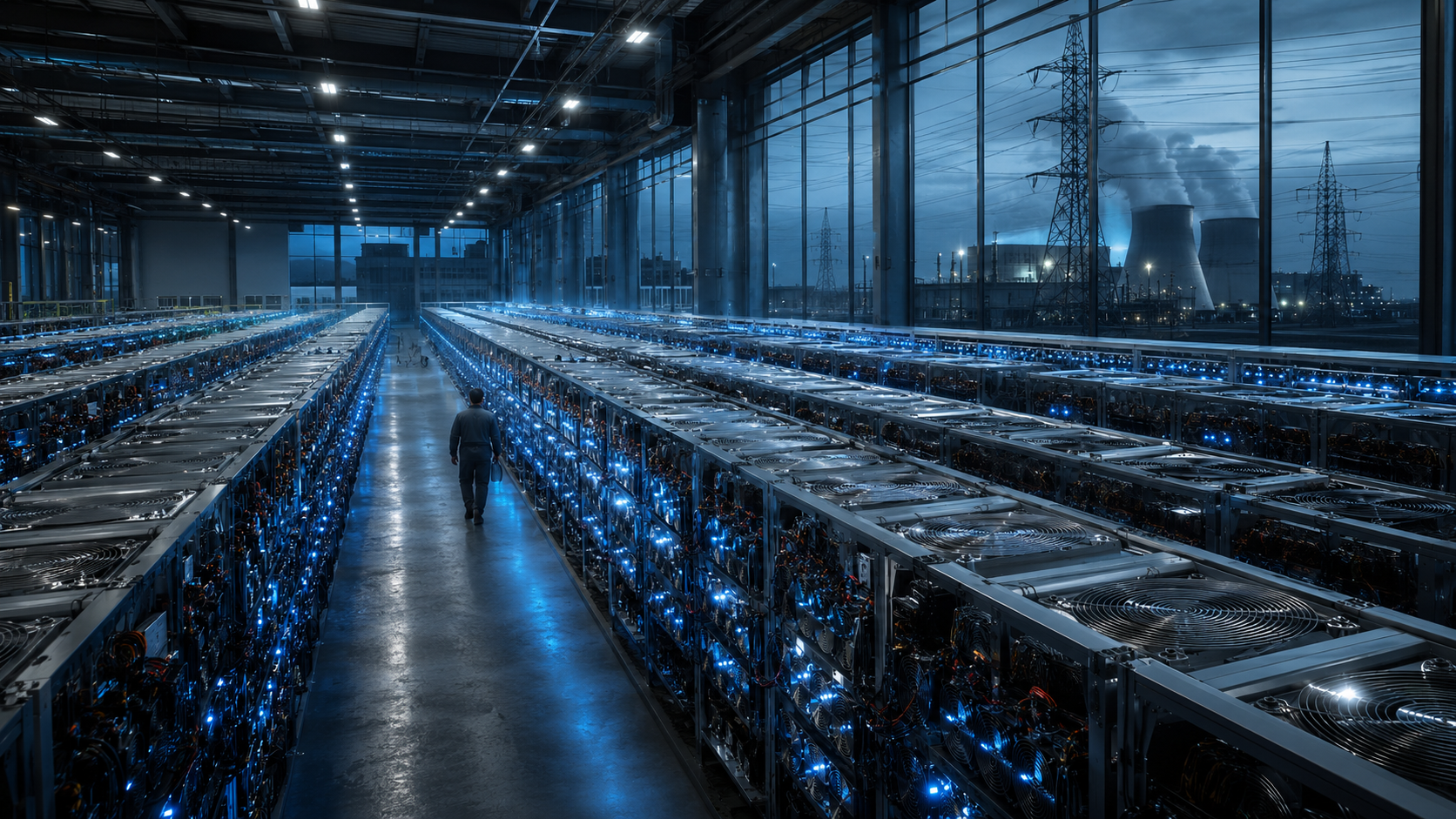
For years, Bitcoin miners enjoyed one of the crypto industry’s greatest growth stories. As Bitcoin climbed to new highs, mining companies raced to build larger facilities, purchase more powerful hardware, and consume enough electricity to make a small city glance nervously at its power bill. Investors rewarded aggressive expansion, equipment manufacturers struggled to keep up with demand, and Bitcoin miners competed relentlessly to add more hash power and secure a larger share of the network’s rewards.
It was an extraordinary growth story.
Like most extraordinary growth stories, however, it eventually encountered reality.
Today, many Bitcoin miners find themselves navigating a far more challenging environment. Lower Bitcoin prices, shrinking transaction fees, rising mining difficulty, and higher operating costs are squeezing profit margins across the industry. Companies that once focused almost entirely on expansion are increasingly focusing on efficiency, cost control, and survival. The race is no longer simply about mining more Bitcoin. It is becoming a competition to determine who can remain profitable when conditions become considerably less forgiving.
Success Created More Competition
Bitcoin mining has always been competitive, but its own success has intensified that competition. Every time Bitcoin’s price rises, more companies invest in mining infrastructure, new facilities come online, and additional computing power joins the network. That increased participation makes the Bitcoin network more secure, but it also raises mining difficulty, meaning each participant must perform more work to earn the same reward.
This creates an unusual business cycle. Good times encourage expansion, but widespread expansion eventually makes those good times more difficult to sustain. Every new mining facility increases competition for everyone else. In many industries, success attracts competitors. In Bitcoin mining, success also makes the job itself more difficult.
That means yesterday’s profitable operation may struggle under today’s market conditions, even if it has not changed a single thing about its business.
Smaller Margins, Bigger Decisions
Mining economics have become increasingly complex. Revenue depends largely on Bitcoin’s market price and block rewards, while expenses are driven by electricity costs, equipment efficiency, maintenance, labor, and financing. When Bitcoin prices weaken while costs remain elevated, margins can disappear surprisingly quickly.
The result is forcing many mining companies to make difficult decisions. Some are upgrading to more efficient hardware capable of producing greater hash power while consuming less electricity. Others are renegotiating energy contracts, relocating operations to regions with lower power costs, or delaying expansion plans until market conditions improve.
There is also increasing pressure from investors. Publicly traded mining companies are no longer judged solely by how much Bitcoin they produce. Shareholders now expect disciplined capital allocation, operational efficiency, and sustainable business models. Mining has matured from a race to grow at all costs into a business where financial discipline matters just as much as computing power.
Wall Street has a remarkable ability to make every industry eventually discover the importance of spreadsheets.
Energy Is Becoming The Deciding Factor
Perhaps no factor influences mining profitability more than electricity. Mining companies have always depended on inexpensive energy, but that advantage has become even more important as margins tighten. A difference of only a few cents per kilowatt-hour can determine whether an operation remains profitable or slips into the red.
This reality is changing where miners choose to build facilities. Regions with abundant hydroelectric, wind, solar, natural gas, or stranded energy resources are becoming increasingly attractive. Some companies are partnering directly with energy producers, while others are locating operations near power sources that would otherwise go unused.
Ironically, Bitcoin mining has evolved into an energy business almost as much as a technology business. The newest mining hardware certainly matters, but access to reliable, low-cost electricity often matters even more. The world’s fastest mining computer is not particularly useful if the electricity bill arrives before the next block reward.
Consolidation Is Coming
Every industry experiences periods of consolidation, and Bitcoin mining appears to be approaching one of its own. Larger companies with stronger balance sheets, lower financing costs, and more efficient operations are generally better positioned to survive prolonged downturns. Smaller operators, particularly those carrying significant debt or relying on older equipment, face much greater pressure.
That does not necessarily mean small miners disappear, but it does mean competition becomes increasingly difficult. Some companies may merge. Others may be acquired. Some facilities could change ownership altogether as stronger operators expand while weaker ones exit the market.
The mining industry has experienced similar cycles before, and each one has tended to leave fewer but stronger participants. Survival, in many cases, becomes the competitive advantage.
Looking Ahead
Bitcoin mining is unlikely to become easier. As the network grows, competition will continue increasing, hardware will continue improving, and companies will keep searching for operational advantages. Future success will depend less on simply owning more machines and more on operating those machines more efficiently than competitors.
That evolution reflects a broader trend across the cryptocurrency industry. As crypto matures, businesses increasingly compete on execution rather than excitement. The companies that survive are often not the ones making the biggest headlines, but the ones quietly controlling costs, improving efficiency, and adapting to changing market conditions.
Bitcoin miners are now entering that phase. The industry’s rapid expansion is giving way to a period of discipline where profitability matters more than ambition and efficiency matters more than size.
For investors, that may not sound as exciting as another mining boom. For the companies hoping to survive the next cycle, it may be the difference between producing Bitcoin and becoming a footnote in someone else’s annual report.