

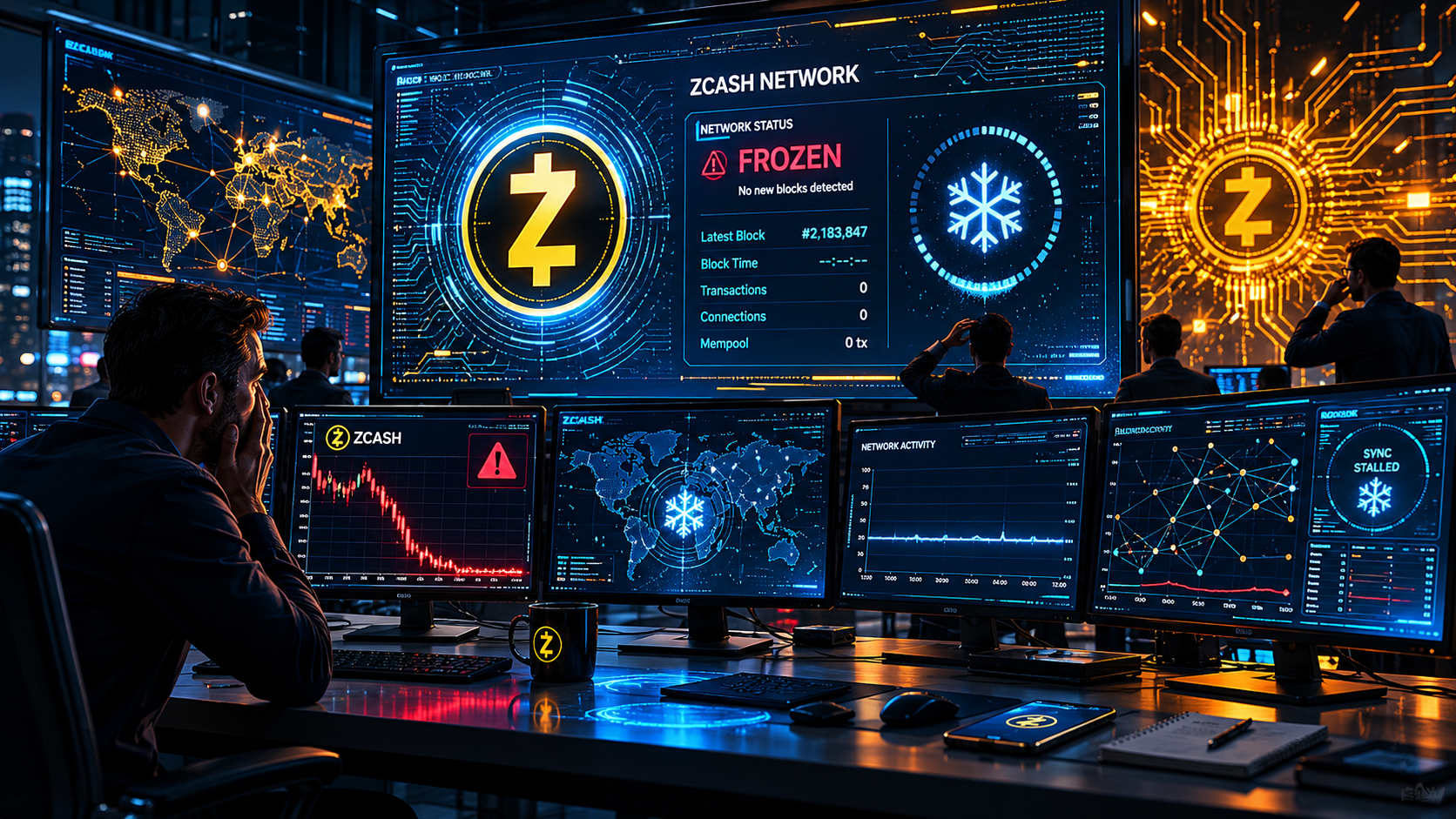
A wave of alarm swept through the Zcash ecosystem after widely used block explorers appeared to show the network had stopped producing blocks for more than four hours, triggering fears of a critical failure across one of crypto’s leading privacy chains.
At the center of the panic was block height 3,364,601, last recorded at approximately 5:27 AM UTC. With Zcash designed to generate a new block roughly every 75 seconds, the apparent silence quickly raised concerns of a consensus breakdown or a serious protocol bug. Thousands of pending transactions appeared stranded, while traders and infrastructure providers scrambled to assess the situation.
Market reaction was swift. ZEC fell between 2 and 3 percent within an hour of the perceived halt, while several exchanges reported delays in deposits and withdrawals due to a lack of visible confirmations.
However, the underlying reality proved far less severe.
Developers and infrastructure operators later clarified that the Zcash blockchain itself had continued functioning normally. The disruption stemmed from failures among certain block explorer nodes and indexing services, which had fallen out of sync with the network and stopped displaying new blocks. This created the illusion of a stalled chain despite uninterrupted block production.
The clarification helped stabilize sentiment, though not without exposing a deeper issue. The incident underscored the fragility of perception in blockchain systems, where visibility tools often serve as the primary interface for users, traders, and institutions. When those tools fail, confidence can erode rapidly, regardless of actual network health.
The timing added to the tension. Just days earlier, Zcash had completed an emergency Orchard upgrade aimed at addressing a vulnerability in its shielded transaction pool. While that upgrade proceeded without incident, the explorer disruption has renewed scrutiny around the resilience of supporting infrastructure, particularly for smaller or specialized networks.
Zcash remains a cornerstone of privacy-focused crypto, leveraging zero-knowledge proofs to enable shielded transactions. Yet the episode highlights a persistent challenge facing privacy coins amid increasing regulatory pressure and market sensitivity. Even temporary or superficial disruptions can amplify uncertainty and trigger outsized reactions.
As of the latest updates, block visibility has been restored across multiple explorers, with no evidence of lost funds or consensus issues. ZEC has partially recovered, though price action remains volatile in line with broader market conditions.
For many in the community, the incident served as a reminder that in crypto, perception can move as fast as reality. The chain did not go down, but for several hours, it appeared to vanish.
Whether this proves to be a minor technical hiccup or a catalyst for stronger explorer decentralization remains to be seen.