
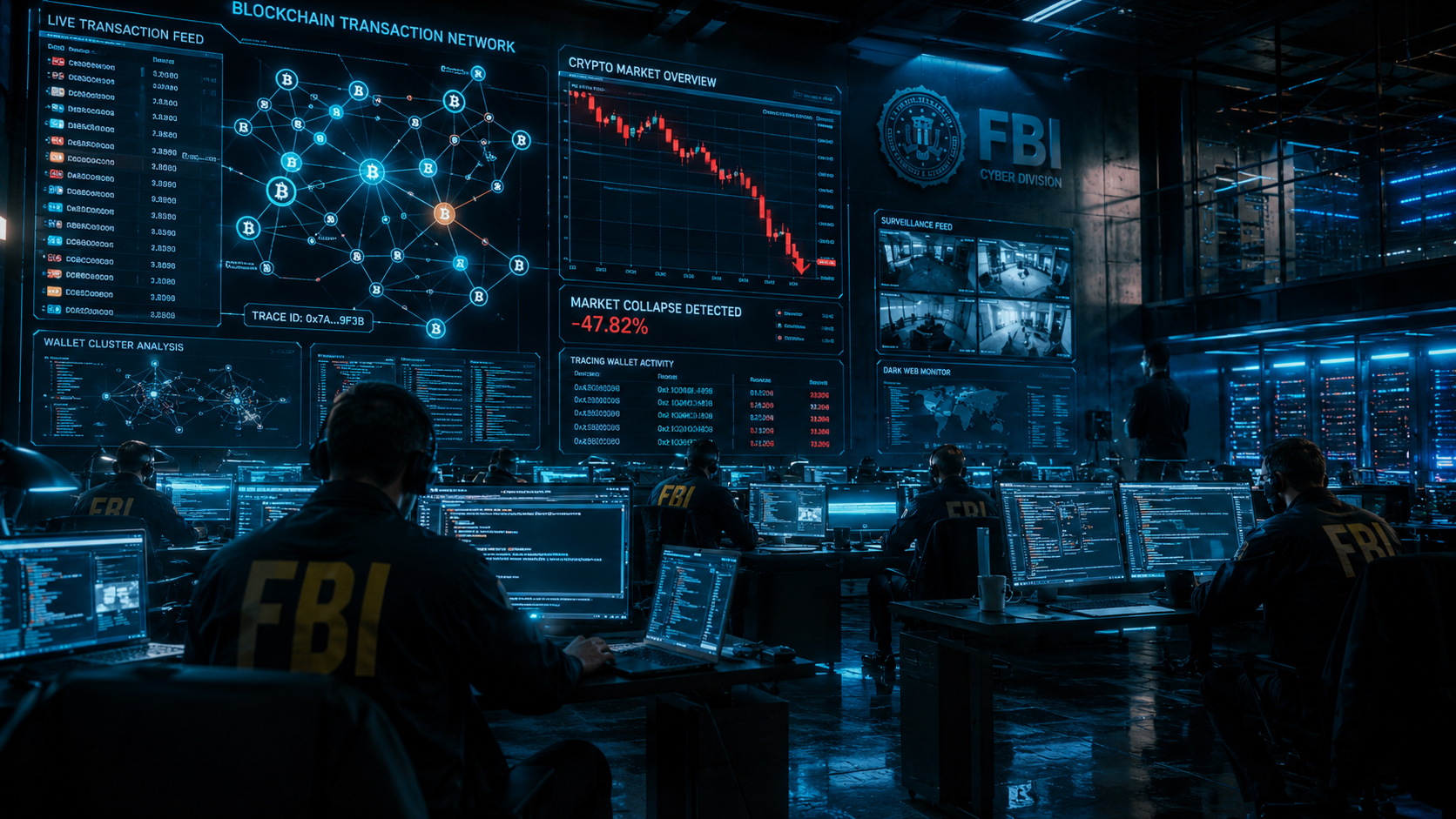
In one of the most aggressive enforcement actions ever launched against the cryptocurrency industry, the Federal Bureau of Investigation revealed it secretly created a crypto token and fake blockchain company to expose alleged market manipulation schemes operating across digital asset markets.
The undercover operation, known as Operation Token Mirrors, led to criminal charges against 18 individuals and entities, the seizure of more than $25 million in cryptocurrency, and the dismantling of multiple automated trading systems accused of inflating token activity through wash trading.
According to U.S. authorities, the case marks the first criminal prosecution of crypto market makers for wash trading and artificial price manipulation, signaling a major escalation in regulatory pressure on deceptive trading practices targeting retail investors.
At the center of the operation was NexFundAI, an ERC-20 token quietly created by the FBI on the Ethereum blockchain. Federal agents reportedly built a convincing ecosystem around the project, including a polished website, branding materials, and marketing campaigns presenting NexFundAI as an AI-focused decentralized finance platform offering passive income opportunities and early-stage investment exposure.
Undercover agents then approached prominent crypto market-making firms posing as token promoters seeking liquidity support for a newly launched digital asset. Investigators allege several firms went far beyond legitimate market-making services, instead offering coordinated wash trading systems designed to artificially inflate trading volume, liquidity, and investor demand.
Authorities say firms pitched extensive manipulation strategies that included synchronized buy-and-sell bots, fabricated trading activity across hundreds of wallets, and “pump-and-dump” style campaigns intended to create the illusion of strong market momentum. Investigators reportedly captured incriminating discussions through recorded calls, online chats, and internal communications.
Once NexFundAI launched on decentralized exchanges including Uniswap, authorities say the accused firms carried out thousands of wash trades using automated systems before law enforcement moved in to halt the activity and preserve evidence.
The crackdown targeted both the market makers facilitating the activity and token projects allegedly paying for manipulation services.
Among the firms charged were CLS Global, ZM Quant, and MyTrade, alongside several executives and employees accused of conspiracy to commit market manipulation and wire fraud. Additional investigations tied to the operation reportedly expanded toward other industry participants across the United States, Europe, and Asia.
Authorities also linked several token projects to the alleged schemes, including entities associated with tokens such as Saitama and Robo Inu.
Some defendants have already entered guilty pleas, while others face extradition proceedings following arrests in countries including Portugal and the United Kingdom.
Wash trading has long been considered one of crypto’s most persistent problems. The tactic involves entities simultaneously buying and selling the same asset to manufacture fake trading activity and create misleading perceptions of demand. Inflated volume can attract unsuspecting retail investors, often allowing insiders to profit before liquidity evaporates.
By creating its own functioning token, the FBI obtained unusually direct evidence of how these schemes allegedly operated behind the scenes. Officials described the approach as a modern evolution of traditional financial fraud investigations adapted for decentralized markets.
The operation produced sweeping results beyond arrests alone. Investigators disabled multiple trading bots operating across roughly 60 tokens while parallel civil enforcement actions from the U.S. Securities and Exchange Commission added securities-related allegations against several defendants.
The case arrives as regulators worldwide intensify efforts to impose stricter oversight on digital asset markets. Proposed legislation in the United States, including broader crypto market structure reforms, could further expand enforcement authority over exchanges, token issuers, and trading firms.
For legitimate crypto projects, the sting operation serves as a warning about the growing scrutiny surrounding trading activity and liquidity practices. For investors, it reinforces the importance of carefully evaluating token fundamentals, organic volume, and project transparency before entering volatile markets.
The FBI’s decision to actively participate in the crypto ecosystem rather than simply monitor it from the outside marks a significant shift in enforcement tactics. As digital asset markets continue evolving, authorities appear increasingly willing to deploy sophisticated undercover strategies to expose manipulation operating beneath the surface.